Separate an interlock replacement from a changed safety function
Before comparing replacement devices, write down why the change is needed and which safety function the existing arrangement is intended to perform. Mechanical fit alone does not establish that a new switch provides an equivalent result.
Record the guard and actuator arrangement
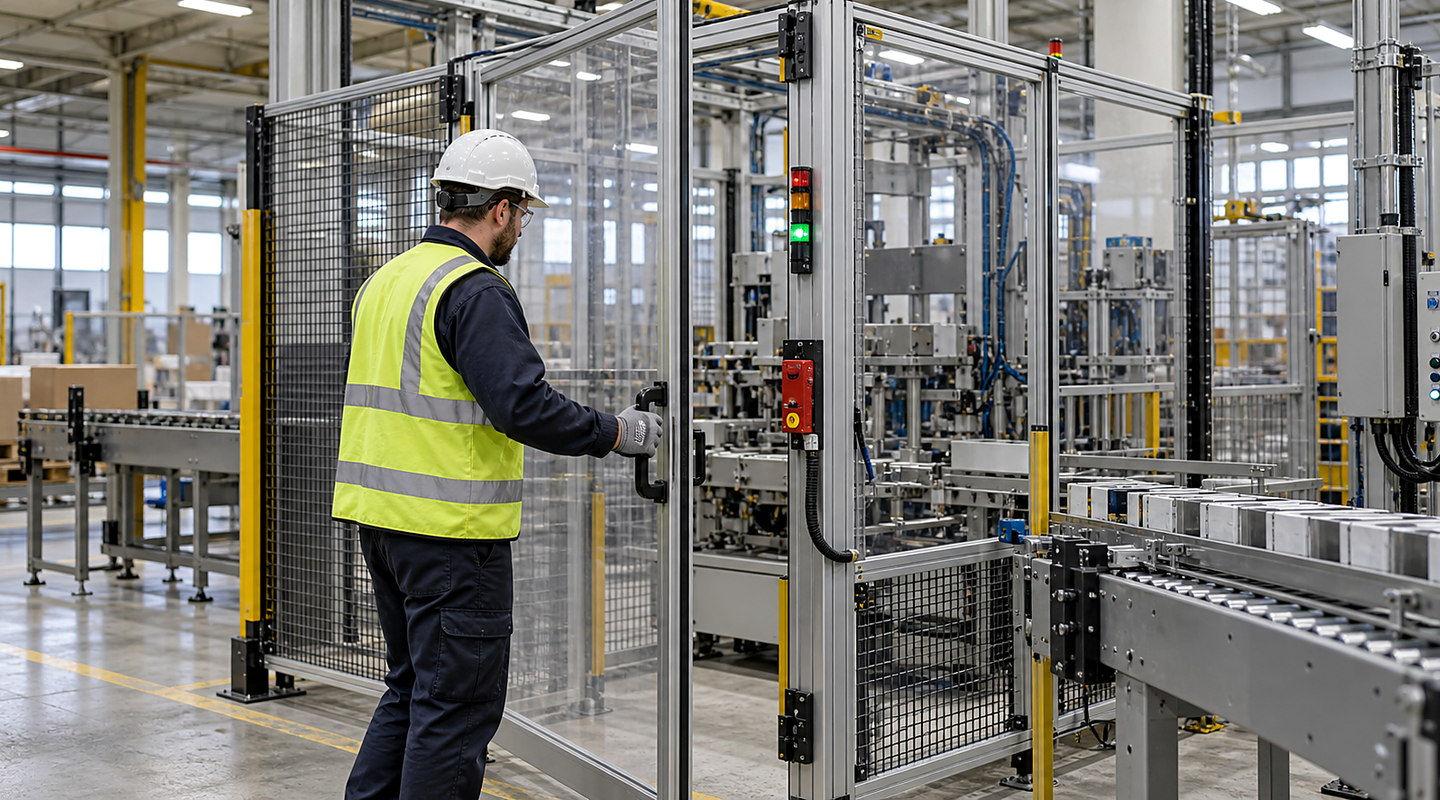
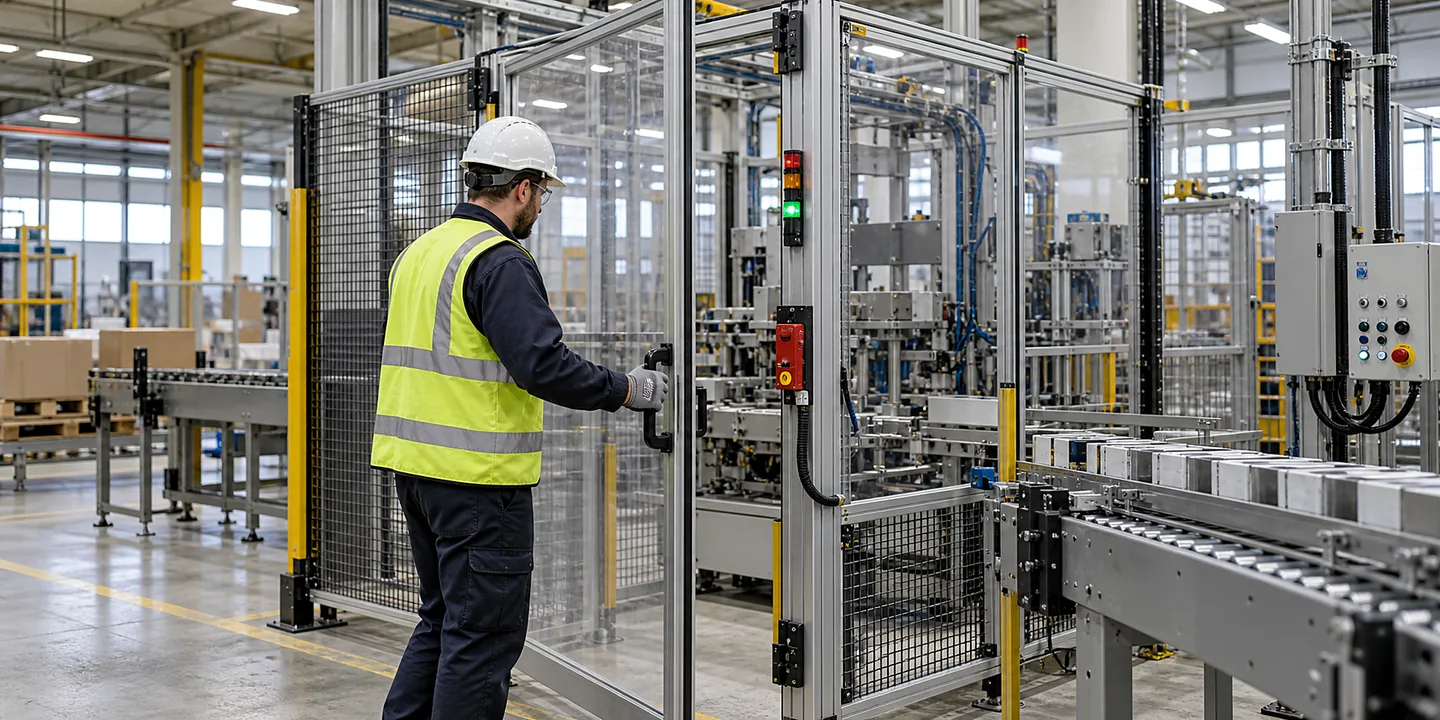
Include movement, alignment, mounting, access frequency and the way the guard is used in production. A recurring alignment fault may reflect a damaged hinge or poorly supported guard rather than a defective switch. Review the physical cause alongside the electrical symptom before selecting the replacement scope.
Establish when access may be permitted
The machine assessment should consider hazardous movement, stopping behaviour and any stored energy. Distinguish monitoring that a guard is closed from locking that controls when it may be opened. Whether guard locking or another measure is required depends on the assessed application, not merely the product description.
Include the complete control response
Record the input arrangement, logic, outputs and reset conditions. Have the design checked for the actual devices and circuit, including relevant fault behaviour. Replacing one component should not silently change the conditions under which hazardous movement can start or continue.
Retain evidence for the installed revision
Update the device identification, wiring and mechanical drawings and the relevant validation record. Include operator and maintenance instructions for the changed arrangement. If existing documentation is incomplete, record that limitation and resolve it before describing the upgrade as a verified like-for-like replacement.
Define an interlock upgrade — explore the existing guidance
Further reading: HSE PUWER overview.