In brief

An existing-machine interlock project can restore a known arrangement or reassess a function affected by changed access, guard mechanics or machine behaviour. Establish which route applies before treating the work as a device replacement.

The planned-modification guide covers changed conditions. For either route, keep guard condition, control response and installed evidence in the same scope.

On the production floor

Match the solution to your product, part and operating needs — Safety Interlock Upgrades

Plan safety interlock upgrades around your machine hazards, operator tasks, access, stopping behaviour and validation evidence. Discuss a site-specific safeguarding concept with Oxford Machine Guarding. Use the application examples to compare safeguarding existing machinery for existing machine interlock upgrades with planned machine modifications involving existing machine interlock upgrades.

Discuss your application
Application 1

Safeguarding Existing Machinery for Existing Machine Interlock Upgrades

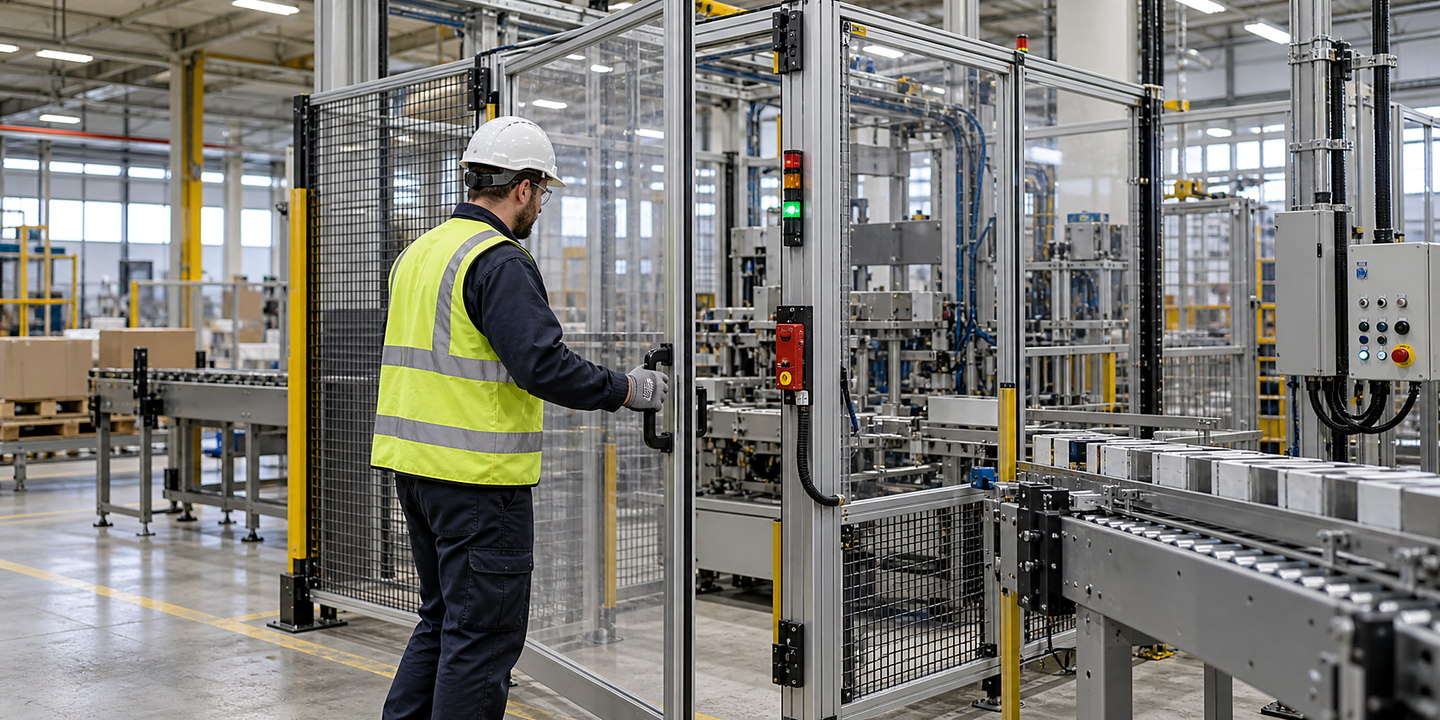
For an existing arrangement, establish the intended safety function and the reason for the problem. Compare the actual guard, actuator, devices and circuit with the records, and review wear or misalignment before describing the work as restoration of an equivalent function.

Explore this application
Application 2

Planned Machine Modifications Involving Existing Machine Interlock Upgrades

For a planned change, identify how access tasks, guard movement, stopping behaviour or controls differ from the assessed arrangement. Review whether release, reset and restart conditions remain suitable, and agree the evidence required for the changed installation.

Explore this application
Choose the right route

Four questions that can change the recommended approach

What arrives?

Describe the real range for hazards and foreseeable access for existing machine interlock upgrades and machine motion and stopping behaviour, plus presentation and upstream controls—not just a nominal drawing.

What must happen?

Define the required outcome for safeguarding existing machinery for existing machine interlock upgrades, the allowed window and what your team can recover without outside help.

What surrounds it?

Record the space, services, neighbouring equipment, people, cleaning and data connections around planned machine modifications involving existing machine interlock upgrades.

What result do you need?

Agree representative trials, difficult samples and the result record for risk-reduction and validation evidence, including who will review it.

ApproachOften suitable whenWatch for
Safety Interlock UpgradesYou need a dedicated solution for a clearly defined duty, product or part range and line interface.Current standards and required performance levels must be assessed for the complete machine and intended use.
Fixed Physical Guarding where Access Is RareAccess is infrequent and the task assessment supports a fixed barrier around the hazard.Check the required cleaning and maintenance access and the physical condition of the guard.
Interlocked or Presence-Sensing Protection where Frequent Intervention Is ForeseeableFrequent intervention needs an assessed protective arrangement for the machine and access tasks.Review stopping and access conditions, controls and validation; do not treat interlocking and presence sensing as interchangeable replacements.