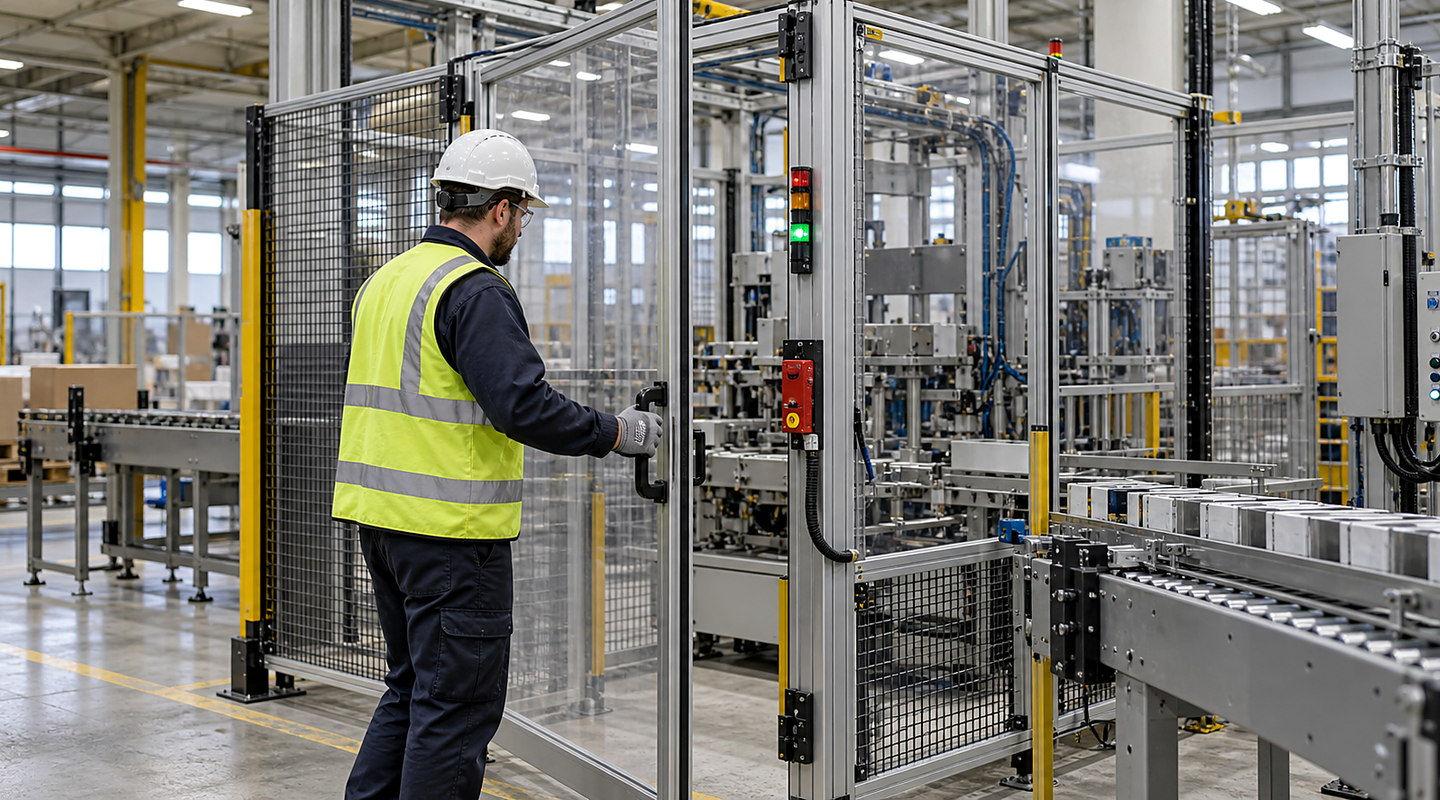
Safety Interlock Upgrades: How the Process Works
Follow the operating sequence for safety interlock upgrades, from preparing the input and controlling the main task to handling exceptions and checking results.
Review the existing guard, actuator, device, circuit and machine response before choosing an interlock replacement. Establish whether the existing safety function remains suitable, define the mechanical and control changes, then check and document the complete installed function before return to service.
Keep the reason for the change and any gaps in the existing records visible throughout the project. The validation guide connects those decisions to the final revision and evidence.
Understand the complete route from input to accepted output — Safety Interlock Upgrades
Follow the affected safety function from the guard arrangement through its input, logic and machine response. Review access and stopping conditions alongside diagnostics, reset and restart; the device is one part of this arrangement.
Discuss your application

Four clear stages for safety interlock upgrades
At each stage, you can review how hazards and foreseeable access for existing machine interlock upgrades and risk-reduction and validation evidence affect the next commitment.
- 01
Survey the Machine, Tasks and Existing Safeguards
Record the observed problem, existing guard movement and alignment, device references and current circuit drawings. Include access for operation, cleaning, maintenance and recovery, and the available stopping and validation information.
- 02
Review Risks and Agree the Safeguarding Concept
Decide whether the work restores an assessed function or changes its requirements. Review mechanical defects and control dependencies together, and assess any need for guard locking from the actual hazards and access conditions rather than the replacement product description.
- 03
Detail, Install and Control the Modification
Agree installation responsibilities, isolation arrangements and the mechanical, wiring or software revisions in scope. Record changes from the agreed design and the checks needed before the modified installation returns to service.
- 04
Inspect, Test and Document the Agreed Safety Functions
Have competent personnel complete the agreed checks for the modified safety function and record the installed revision. Update drawings and operator or maintenance information, and resolve findings before the agreed return to service.
Decisions and results stay connected
| Stage | What happens | What you can review |
|---|---|---|
| Survey the Machine, Tasks and Existing Safeguards | Confirm the requirements for existing machine interlock upgrades, the operating range and the definition of a good result. | Your samples, current information and any points that still need confirming. |
| Review Risks and Agree the Safeguarding Concept | Compare workable methods using hazards and foreseeable access for existing machine interlock upgrades and machine motion and stopping behaviour from your real production. | The trial method, observations and reason for the recommended route. |
| Detail, Install and Control the Modification | Resolve operating, cleaning and maintenance tasks, existing control-system architecture and the physical, control, safety and data connections. | The agreed layout, line connections and any changes from the proposal. |
| Inspect, Test and Document the Agreed Safety Functions | Check normal, difficult and fault conditions before your team takes over the system. | Results for space, visibility and operator ergonomics and risk-reduction and validation evidence, plus actions and operating information. |
Keep connected responsibilities clear
Your final safety interlock upgrades scope must also account for space, visibility and operator ergonomics, risk-reduction and validation evidence, current regulations and the conditions at your site.
- Current standards and required performance levels must be assessed for the complete machine and intended use.
- A site survey and task-based risk assessment are required before a safeguard is selected.
- Mechanical changes can affect access, visibility, cleaning and machine operation.