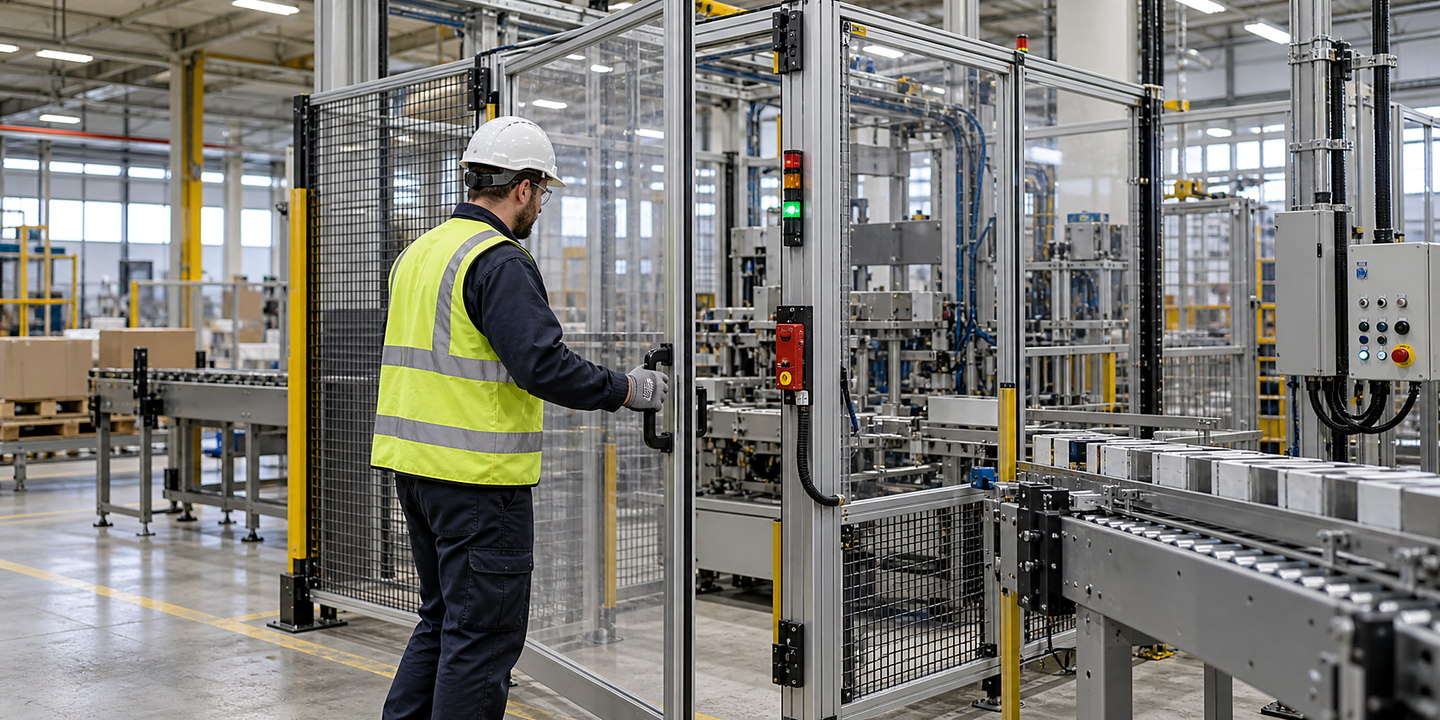
Plan mechanical, electrical, control, data, safety and operator interfaces for safety interlock upgrades.
In brief
Map the upgraded interlock with guard position, machine controls and operator access. Define installation, stopping and restart responsibilities, recovery and documented validation before the modified system is handed over.
For planned machine modifications involving existing machine interlock upgrades, define every physical connection, signal, responsibility, check and fallback before installation.
On the production floor
Connect equipment, controls and people into one reliable process — Safety Interlock Upgrades
Define the upgrade boundary around the actual guard, installed device and complete control response. The upgrade checklist helps record which mechanical and circuit details are confirmed, what will change and who must resolve the remaining information.
Six areas to coordinate for safety interlock upgrades
Mechanical
Record guard movement, hinge and mounting condition, actuator alignment and access around the safeguarded area. Identify any mechanical correction needed alongside the device change; replacing a switch does not restore a guard that no longer closes as intended.
Electrical
Provide current circuit drawings and installed device references, with the proposed electrical scope identified. Record responsibility for isolation, panel and cable work and for confirming the actual installation against the revised drawings; this brief does not specify wiring connections.
Controls
Identify the affected inputs, logic, outputs and diagnostic response, including connections to unchanged machine controls. Record the required stop, reset and restart conditions and the competent review needed to confirm the complete modified function.
Safety
Review access tasks, stopping behaviour and any hazards that remain when the guard can open. Assess whether the original release arrangements remain suitable and any need for guard locking; a closed-guard indication alone does not establish when access is permitted.
Data
Keep device identification and mechanical, wiring and any software revisions with the validation record. Identify which installed configuration each result covers, who closes findings and which inspection or maintenance instructions need updating.
Your team
Identify the people responsible for operation, cleaning, maintenance and fault recovery at the affected guard. Agree how changed access and reset arrangements will be communicated and who reviews the records before the machine returns to service.
How the work comes together
Plan fault recovery for safeguarding existing machinery for existing machine interlock upgrades as carefully as normal running
For Safety Interlock Upgrades, your team can review each stage before the complete installation is put into routine use.
01
Survey the Machine, Tasks and Existing Safeguards
Share the machine, operating tasks and access requirements, including the normal range for hazards and foreseeable access for existing machine interlock upgrades and the difficult machine motion and stopping behaviour cases.
02
Review Risks and Agree the Safeguarding Concept
Compare suitable methods and use focused trials to show how each option performs against operating, cleaning and maintenance tasks.
03
Detail, Install and Control the Modification
Connect the equipment to your line, services and controls while resolving existing control-system architecture for day-to-day operation.
04
Inspect, Test and Document the Agreed Safety Functions
Confirm space, visibility and operator ergonomics, then complete and record risk-reduction and validation evidence before your operating team takes over.
For your application: agree the complete-function validation scope, competent checking responsibilities and installed-revision records. Retain findings and closure evidence for the guard, device and connected controls before the agreed return to service.
Important limits
Line connections can change the approach for Safety Interlock Upgrades
Current standards and required performance levels must be assessed for the complete machine and intended use.
A site survey and task-based risk assessment are required before a safeguard is selected.
Mechanical changes can affect access, visibility, cleaning and machine operation.